
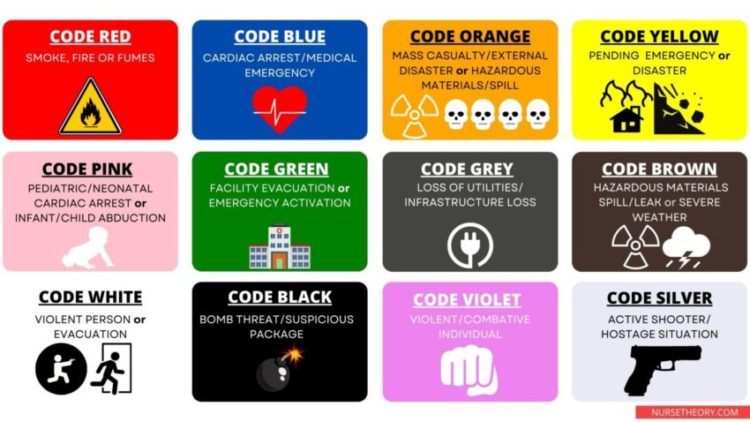
Hospitals use emergency color codes to quickly communicate urgent situations to medical staff without causing panic among patients and visitors. These codes alert healthcare professionals to medical emergencies, safety threats, disasters, or other critical incidents that require an immediate response.
Hospital emergency codes allow doctors, nurses, and security teams to coordinate responses rapidly and efficiently. Depending on the situation, a code may signal a life-threatening medical emergency, a fire, a security threat, hazardous materials, or a natural disaster.
This guide explains the most common hospital color codes, what they mean, and how they are used in healthcare facilities.
What Do Hospital Codes Mean?
Hospital codes are color-coded alerts used by healthcare staff to communicate emergencies quickly. These codes help coordinate emergency responses while preventing unnecessary panic among patients and visitors.
However, there is no universal hospital code system used worldwide. Hospitals and healthcare systems often determine their own code definitions, meaning the exact meaning of a color code may vary depending on the hospital or region.
The most commonly recognized codes include Code Blue, Code Red, and Code Black, although many hospitals use additional codes depending on the type of emergency.
Common Hospital Emergency Codes
| Hospital Code | Common Meaning | Description |
|---|---|---|
| Code Blue | Medical emergency | Cardiac arrest or respiratory failure requiring immediate medical response |
| Code Red | Fire emergency | Smoke, fire, or suspected fire within the hospital |
| Code Black | Bomb threat | Suspicious package or potential explosive threat |
| Code Silver | Active shooter | Weapon threat, hostage situation, or active shooter |
| Code Orange | Hazardous materials | Chemical spill or hazardous contamination |
| Code Yellow | Disaster alert | External disaster or mass casualty event |
| Code Pink | Infant abduction | Missing or abducted infant within the hospital |
| Code Gray | Aggressive individual | Combative or violent patient or visitor |
| Code Green | Evacuation | Emergency evacuation required |
These codes help hospitals maintain organized and efficient responses during emergencies.
Code Blue
Code Blue is one of the most widely recognized hospital emergency codes.
It indicates a life-threatening medical emergency, usually involving cardiac arrest or respiratory failure. When a code blue is announced, a specialized resuscitation team immediately responds with equipment such as defibrillators, medications, and airway support.
Because this code is widely used across healthcare systems, it is one of the few hospital codes that remains relatively consistent between hospitals.
Source: WebMD – Code Blue
Code Red
Code Red indicates a fire or suspected fire within the hospital. Staff members activate a code red if smoke, flames, or burning odors are detected.
During a code red emergency, hospital staff typically follow the RACE fire response protocol:
- Rescue anyone in immediate danger
- Activate the alarm
- Contain the fire
- Extinguish or evacuate
Fire emergencies require coordinated responses to protect vulnerable patients who may be unable to evacuate independently.
Source: National Health Care Provider Solutions
Code Black
Code Black typically indicates a bomb threat or suspicious package in a hospital environment.
When this code is announced, hospital security teams and law enforcement are alerted to investigate the threat. Depending on the situation, hospitals may initiate lockdown procedures or evacuate affected areas.
Because bomb threats pose a significant safety risk, code black procedures are carefully coordinated with local emergency responders.
Code Silver
Code Silver alerts hospital staff to an active shooter, hostage situation, or weapon-related threat.
This code triggers a coordinated response involving hospital security personnel and local law enforcement. Hospitals may initiate lockdown procedures to protect patients and staff while authorities manage the threat.
Code Orange
Code Orange typically indicates hazardous materials or chemical spills inside a healthcare facility.
Examples include chemical exposure, toxic substances, or contamination that requires specialized cleanup and decontamination procedures.
In some hospitals, code orange may also refer to large-scale disasters or mass casualty events.
Code Yellow
Code Yellow usually indicates an external disaster or mass casualty event that may bring a sudden influx of patients to the hospital.
Examples include:
- Natural disasters
- Major vehicle accidents
- Industrial incidents
- Severe weather events
This code prepares medical teams for increased patient volume and emergency triage situations.
Code Pink
Code Pink is used when an infant is missing or suspected to be abducted from a hospital.
This code immediately triggers security procedures such as locking hospital exits and searching for the missing infant.
Hospitals implement strict protocols to protect newborns and prevent infant abduction incidents.
Source: Loma Linda University Health
Code Gray
Code Gray usually indicates an aggressive, combative, or violent individual within the hospital.
The individual may be a patient, visitor, or family member who poses a threat to staff or other patients.
Security personnel and trained staff respond to safely manage the situation.
Code Green
Code Green generally refers to an evacuation emergency.
Hospital staff may initiate a code green when a portion of the facility must be evacuated due to structural damage, environmental hazards, or other safety risks.
Code Brown
Code Brown can have multiple meanings depending on the hospital. In many facilities it refers to severe weather events or external disasters.
Some hospitals may also use code brown for hazardous material spills or missing adult patients.
Informally, some healthcare workers jokingly use the phrase “code brown” to refer to bowel accidents, but this is not an official hospital emergency code.
Why Hospital Codes Are Not Universal
One challenge with hospital emergency codes is the lack of a universal standard. Different hospitals and healthcare systems often use slightly different definitions for certain color codes.
This variation can create confusion when healthcare professionals move between hospitals or work as travel nurses.
For example, a nurse relocating to a different state may need to learn an entirely new hospital code system.
Some countries, including Canada and the United Kingdom, use more standardized hospital code systems to reduce confusion and improve emergency response coordination.
How Hospitals Communicate Emergency Codes
Hospitals use several communication systems to announce emergency codes to staff quickly.
Common hospital alert systems include:
- Public address (PA) intercom systems
- Hospital paging systems
- Mobile alert apps
- Smartphone notifications
- Emergency call buttons
- Digital communication platforms
These technologies allow healthcare teams to respond quickly and coordinate with emergency responders such as EMS teams, police, and fire departments.
Fast communication during emergencies can significantly reduce injuries, property damage, and loss of life.
Final Thoughts
Hospital emergency codes are an essential part of healthcare safety systems. They allow medical professionals to quickly identify emergencies and respond effectively while maintaining a calm environment for patients and visitors.
Although the exact meaning of certain codes may vary between hospitals, understanding the most common emergency codes helps healthcare workers prepare for critical situations and deliver rapid, coordinated care.